Emergency furnace repair in Littleton when the house cannot wait
Emergency Furnace Repair in Littleton handles the calls that cannot sit until next week: a furnace dead on a night forecast near zero, scorch marks around the burner opening, or a carbon monoxide alarm that sent everyone outside. Once the gas utility or fire department has made the home safe, we find what failed and get heat back. Urgent heater repair in Littleton, CO reaches houses, townhomes and rentals alike.
Check before restartingVent and burners inspected before power-up
Respect utility tagsRed tags and shutoffs stay in place
Find the trip causeSafety switches never simply reset
Measure after repairCO rechecked at furnace and register
What Emergency Furnace Repair Includes
An emergency visit covers the safety checks first and the repair second, because both matter. The items below are part of every emergency call. If the furnace cannot be made safe on this visit, we leave it off, explain why, and help you plan the next step, including temporary measures to protect the house.
Venting and flue inspection
We inspect the vent connector, draft hood or PVC pipes, and the exterior termination for gaps, blockages, ice and disconnected joints. Venting faults are behind many CO alarms and rollout trips, so this check comes before any restart.
Combustion and CO readings
A combustion analyzer measures CO in the flue and room air before and after the repair. Readings outside safe ranges keep the furnace off until the cause is corrected.
Safety switch review
Rollout switches, high limit switches and pressure switches are checked to find which one tripped and why. The trigger gets repaired, and the safety device is never bypassed or blindly reset.
Heat exchanger look
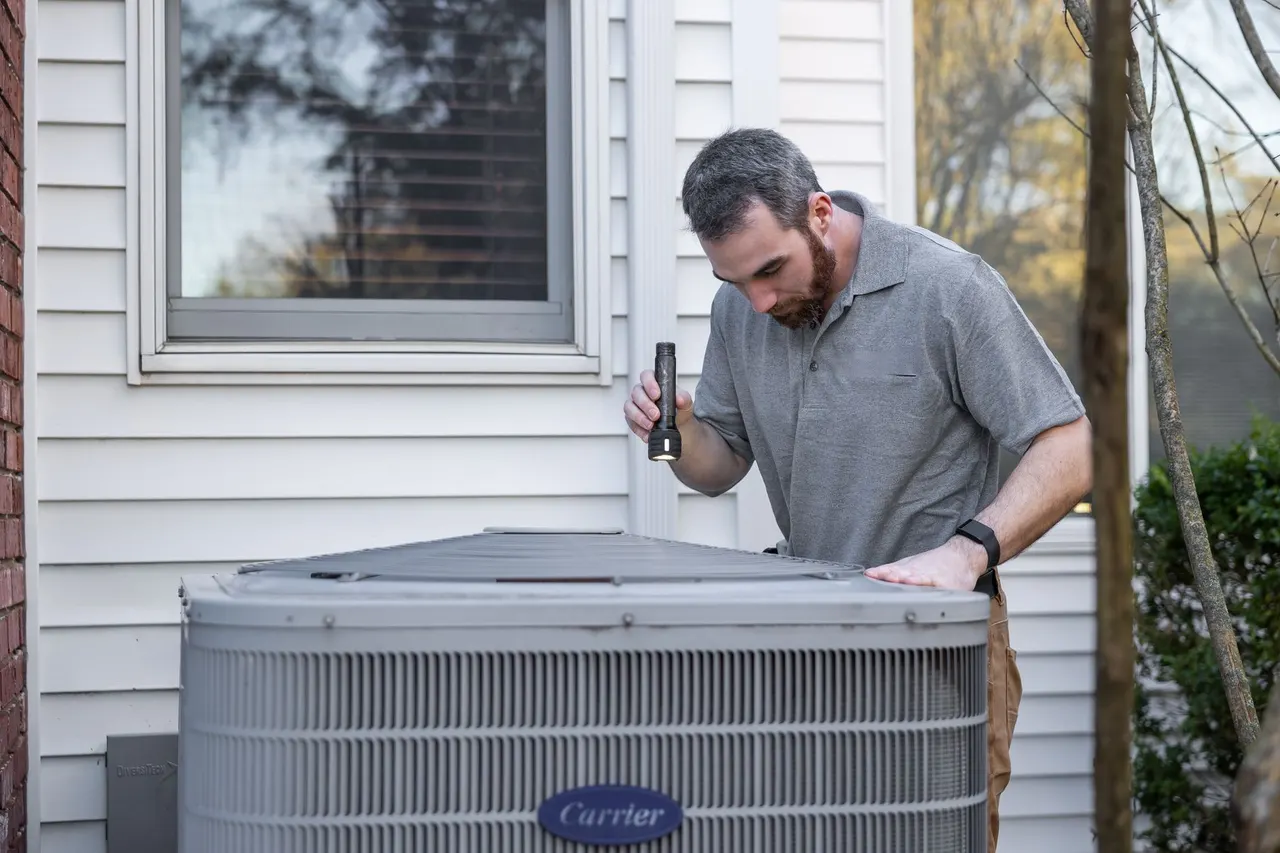
Using a flashlight and inspection mirror, we check visible heat exchanger surfaces for cracks, rust-through and soot, and watch the flame when the blower starts for disturbance that points to a breach.
Failed part repair
Once safety is confirmed, we test and replace the failed part, such as an igniter, pressure switch, capacitor or limit switch, with your approval and a price agreed first.
Homes and businesses.
The approach is the same for a home and a business. What changes is the access, the schedule and who needs the paperwork.
Homes and condos
A furnace emergency at home is stressful, especially with children or older family members. We put safety first, explain what we find, and restore heat as soon as the furnace is safe to run.
No heat on a near-zero night
CO alarm after the utility cleared
Rollout switch keeps tripping
Businesses and buildings
A heating failure at a shop or office can close the doors or freeze sprinkler lines. We arrange access through the owner or manager, check safety and repair the unit with clear communication throughout.
Rooftop unit down before opening
Shop heater tripped overnight
Tenant space losing heat fast
Emergency Furnace Repair in Littleton, Explained
A plain-language look at what Emergency Furnace Repair involves and when it is needed.
Emergency Furnace Repair in Littleton is top-priority heating work for furnace failures that put people, pets or the building at risk if they wait. Two kinds of problems qualify. The first is a safety hazard: a gas odor, a CO alarm, flames rolling out of the burner box, or a furnace that tripped its rollout switch. The second is a loss of heat that turns dangerous, such as indoor temperatures falling toward 50 degrees with pipes in outside walls. In the first case, the utility or 911 comes first and we follow. In the second, we are the first call.
Littleton winters bring both kinds. Arctic fronts can drop overnight lows from the 40s into single digits within a day, and a furnace that limped along in October fails under the longest run times of the year. Older basements near Downtown and Sterne Park often have flue connectors and draft hoods that have been in place for decades, and a blocked or disconnected vent is one cause of CO alarms we see. If you are searching for an emergency heater repair near me in Littleton, start by deciding which kind of emergency you have, using the steps on this page.
In a furnace emergency, safety checks come first and the repair second, even when the house is cold.
What it is
Urgent repair for furnace failures that threaten safety or the home, done after any gas or CO hazard is cleared.
When you need it
No heat in freezing weather, flame rollout, scorch marks, a red tag or a CO alarm after the home is cleared.
What to expect
A vent and CO inspection, the cause of the trip found, a quoted repair and testing before heat returns.
How an Emergency Call Unfolds
Every emergency call follows a set order so that safety is never skipped under time pressure. When gas or carbon monoxide is part of the story, the first steps happen before our truck pulls up. Once we are in the house, a one-part urgent fix usually wraps up in an hour or two.
Get to safety
A rotten-egg odor or a shrieking detector means walking out without touching switches or using a phone indoors. Once outside, dial 911 or the utility emergency line printed on your Xcel bill. They check the air and the gas line. Call us after they have cleared the home or shut the gas off.
Leave home
Call utility
Wait clear
Urgent call to us
Tell us what happened, whether the utility or fire department has been out, what they found, and how cold the house is. Note any LED code on the furnace. We use that information to decide what parts to bring and to schedule the visit as quickly as we can.
Symptom
Indoor temp
LED code
Safety inspection first
On arrival, the technician inspects the vent connector, flue, burner area and visible heat exchanger surfaces, checks for scorch marks and soot, and takes CO readings. Any red tag or utility shutoff is respected. The furnace is not restarted until it passes these checks.
Vent check
Burners
CO reading
Find and fix
With safety confirmed, we run through the furnace start-up sequence and test the failed part. The repair is explained and priced before it begins. Common emergency parts, such as igniters, pressure switches, capacitors and limit switches, are carried on the truck.
Test part
Quote
Replace
Test and hand back
Once the repair is done, the furnace goes through several heat cycles while we watch temperature rise and recheck CO at the furnace and at a supply register. You get a short note on the cause and the fix, plus anything that needs follow-up work.
Cycles
Recheck CO
Repair note
Emergency Tools and Safety Methods
Move across a circle, or focus it and press Enter, for an illustrative thermal view of the photograph.
Combustion analyzer
Measures carbon monoxide and combustion quality in the flue and room air, deciding whether a furnace can safely run after an emergency.
Combustible gas detector
Sniffs for gas leaks at the gas valve, union, flex connector and burner manifold after any utility shutoff or gas-related emergency.
Digital manometer
Measures gas pressure and vent draft, showing whether a pressure switch trip came from a blocked flue or a failing inducer.
Multimeter
Tests igniters, safety switches, fuses, transformers and electric heating elements to locate the failed part quickly during urgent calls.
Thermal views are illustrative, generated from the photographs.
Methods
Safety before restart
No furnace is restarted after a CO alarm, rollout trip or utility shutoff until venting, burners and the heat exchanger area are inspected and CO is measured. This order holds even when the house is cold and time is short.
Cause behind each trip
Safety switches are treated as messengers. When a rollout, limit or pressure switch has tripped, we find the physical cause, such as a blocked flue, low airflow or failed inducer, before resetting or replacing the switch.
Triage by risk
During cold snaps, calls are prioritized by risk to people and property, with households without heat that include infants, older adults or freezing pipes moved ahead of routine work.
Post-repair CO verification
After every emergency repair on a gas furnace, CO is measured again at the furnace and at a supply register over several cycles, so the repair is proven safe and not just working.
When an Emergency Visit Is Needed
Near-zero morning
A family in Goddard wakes to 54 degrees on a morning forecast at 2 degrees, with the furnace blower running and no flame.
We arrive with common ignition parts, confirm venting and CO are safe, and find a cracked hot surface igniter. We replace it, look over the sensor rod and gas pressure, and run several cycles.
Outcome: The house climbs back toward the thermostat setting within the hour, and the family knows the furnace passed its safety checks.
Shared vent
After an Xcel Energy visit, a Southwest Littleton furnace is left off because the CO alarm sounded overnight.
We inspect the flue connector and find a joint pulled apart behind the water heater draft hood. We reconnect and secure the vent, check the draft, test CO at the furnace and registers, and confirm both appliances vent correctly.
Outcome: The furnace runs with clean readings, the vent is secured with proper screws and support, and the household has a clear record of the fix.
Condo breaker
A condo owner near Ketring Park finds the electric furnace dead on a night in the low teens, with the breaker tripping repeatedly.
We test the heating elements and wiring and find one element shorted to the cabinet. We isolate and replace it, check the remaining elements and sequencers, and confirm proper amp draw.
Outcome: Heat returns the same visit, and the breaker stays on because the shorted element that caused the trips is gone.
Sterne ParkGoddardProgress Park
Emergency Repair Realities in Littleton
Furnace emergencies in Littleton follow the weather. Fronts sliding down from the north can cut temperatures by 40 degrees in a day, and the first sub-10 degree nights each winter bring a wave of failures from furnaces that ran lightly through fall. Altitude matters as well.
At about 5,351 feet, a furnace with sea-level gas settings or a mismatched pressure switch is more likely to over-fire, roll flame or lock out under long run times. Housing stock shapes the type of emergency. Older homes near Downtown and Sterne Park often have draft-hood furnaces sharing a vent with the water heater, where a loose connector can cause CO alarms.
Townhomes and condos frequently have closet or attic furnaces with limited combustion air, and some older condo buildings rely on electric furnaces whose heating elements fail under heavy load. Our emergency furnace repair in Littleton accounts for each of these, starting with venting and CO and ending with altitude-correct settings.
Sterne Park: Older homes here often have draft-hood furnaces sharing a single vent with the water heater, so emergency checks always include the shared vent connector and draft.
Goddard: Mid-century ranches with basement furnaces see emergency igniter and pressure switch failures on the first very cold nights after a mild fall.
Progress Park: Homes with original ductwork and small returns can overheat furnaces into rollout or limit trips during long cold-snap run times.
Sudden arctic fronts dropping temperatures 30 to 40 degrees: Furnaces jump from light use to nonstop runs, exposing weak igniters, capacitors and inducers on the coldest nights, when calls are most urgent.
Shared vents between furnaces and water heaters in older homes: A loose or corroded shared vent can spill exhaust into the basement, so CO alarms in these homes call for a full vent inspection before any restart.
Heavy snow covering side-wall vent terminations: Blocked intake or exhaust pipes stop high-efficiency furnaces and can cause pressure switch lockouts, making snow clearance part of many emergency visits.
Technician asks what the utility found and inspects venting
Work area protected and furnace opened for safety checks
CO rechecked after repair and follow-up items explained
From problem to finished result.
IllustrativeThe thermal view is generated from the photograph. It is not a measurement. Drag the handle, or use the arrow keys once it is focused.
Single-digit night in Goddard
Before: The house was 54 degrees and dropping, the blower ran and the burners never lit. The control board flashed an ignition lockout code.
After: A cracked igniter was replaced, venting and CO checked clean, and the furnace lit on four consecutive cycles. The house returned to 68 degrees within about 90 minutes.
Book a yearly service in September or October so igniters and sensors get checked before the first cold snap, and keep a spare filter on hand for winter.
Shared vent in Southwest Littleton
Before: A CO alarm sounded overnight and the furnace was left off after the utility visit. The flue connector behind the water heater had separated at a joint.
After: The connector was reassembled with screws and proper support, draft confirmed at both appliances and CO readings returned to normal levels at the furnace and registers.
Test CO alarms monthly, replace them by the date printed on the unit, and have the vent connector checked during each annual service.
Electric furnace breaker trips
Before: An electric furnace in a condo closet tripped its breaker every few minutes on a night in the low teens, leaving the unit without heat.
After: A shorted heating element was replaced, the remaining elements and sequencers tested, and amp draw measured within the rating. The breaker held through extended testing.
Keep the closet clear of stored items for airflow, change the filter regularly and call promptly if a breaker trips more than once.
Urgent Heater Repair in Littleton for Real Hazards
Most urgent calls around here match one of four situations, and the first move differs for each. Knowing which one you are dealing with tells you whether to call 911, Xcel Energy or us first. These are the emergencies we see most often around Littleton.
Freezing no-heatNo heat with overnight lows in the single digitsIndoor temperatures can fall into the 40s by morning, putting pipes, pets and vulnerable family members at risk, and frozen pipes can burst once they thaw. We prioritize the visit, check safety, then walk the light-off order until the broken component shows itself. Igniters, pressure switches and capacitors are carried on the truck, so most of these calls end with heat running again before we leave.
Flame rolloutRollout switch tripped or scorch marks at the burnersFlame rolling out of the burner box can damage wiring and the cabinet and points to a blocked flue or heat exchanger problem that can produce CO. We keep the furnace off until we inspect the flue, burners and heat exchanger, find the blockage or breach, and correct it. Only then is the rollout switch reset or replaced and the furnace tested with CO readings.
After a CO alarmCO alarm sounded and the home has been clearedRunning the furnace again without finding the cause can repeat the exposure, and some CO sources are hard to spot without testing. We measure carbon monoxide in the vent, at the cabinet and at supply grilles, inspect venting and the heat exchanger, and check other gas appliances that share the vent. The furnace returns to service only after readings are within safe limits.
Red-tagged furnaceFurnace red-tagged by the gas utilityA red tag means gas to the appliance has been shut off for safety, and the furnace cannot legally or safely be relit until the hazard is repaired. We find and repair the condition behind the tag, such as a leaking gas valve, vent problem or cracked heat exchanger, and explain the next step for getting gas service restored to the appliance.
What an Emergency Visit Gets You
A safe furnace first, then heat that lasts through the cold stretch.
A clear safe-or-unsafe answer
Before anything is restarted, we inspect the flue, burners and heat exchanger area and take CO readings. You leave the conversation knowing whether the furnace can run tonight or has to stay off, and why. Any unit with a breached heat exchanger or a loose vent stays off until it is fixed.
Heat back when it is safe
Many emergencies turn out to be a single failed part, such as an igniter, inducer capacitor or pressure switch. When the furnace checks out safe and the part is on the truck, it is running again the same visit. A full repair and test usually takes one to two hours.
Pipes protected while you wait
If the furnace cannot run safely tonight, we tell you how to protect plumbing until the repair: open cabinet doors on outside walls, let faucets drip, and use electric space heaters with three feet of clearance. Those steps buy time when indoor temperatures are dropping fast.
The cause, not just the symptom
A rollout switch trip or a CO alarm has a reason behind it, such as a blocked flue, soot buildup or a split in the heat exchanger. We track down that reason, because resetting a safety switch without fixing its cause only puts the hazard back in service.
What a written scope covers.
What a written scope covers and what shapes it. Prices are set by the business after the first look.
A furnace emergency is any failure that threatens safety or the house: a gas smell, a CO alarm, flame rollout, scorch marks at the burners, or no heat while indoor temperatures fall toward 50 degrees. Gas odors and CO alarms go to 911 or Xcel Energy first. No heat in freezing weather, especially with infants, older adults or exposed pipes in the home, is a call to us right away.
Leave the house immediately, without lighting anything, flipping switches or using a phone indoors. From outside, call 911 or the Xcel Energy gas emergency number. The utility will check for leaks and may shut off gas to the furnace or the whole house. After they clear the home, call us to repair whatever caused the leak or shutoff, and we will relight and test the furnace once it is safe.
No, keep the furnace off until the cause is found and fixed. Detectors trip because of blocked flues, loose vent joints, breached heat exchangers or any gas appliance burning dirty. After the fire department or utility clears the home, we inspect the venting and heat exchanger, take CO readings and repair the cause. Replace CO alarms that are past the date printed on them.
Pipes in outside walls, crawlspaces and garages can freeze when indoor air drops into the 40s during a hard freeze, even if the middle of the house feels warmer. If your furnace is down, prop open the cabinet doors under sinks that sit against outside walls, keep a thin stream running from those taps and place any space heater well clear of fabric. Then call us, since a frozen and burst pipe costs far more than the furnace repair.
A gas smell or CO alarm means stepping outdoors and phoning 911 or your utility before anyone else. A house losing warmth in a hard freeze means phoning us right now with the furnace symptom and indoor temperature. We arrive with common emergency parts and check safety before restarting anything.
Call (983) 200-5821 and describe the problem: a cold house, burners that light and go out, a flashing LED or a new sound. Keep your street address handy so we can confirm your county. For planned work such as yearly maintenance or pricing a new furnace, the contact form works too.